
Match information
Match analysis
This Bundesliga transition football analysis is part of FutebolAI's tactical data series, quantifying how Germany's top flight has shifted toward rapid transitions between defence and attack.
Bundesliga 2025/26: The Rise of Transition Football in Germany
The Bundesliga has always been a league defined by speed, but the 2025/26 season marked a tactical inflection point. Across the division, teams increasingly abandoned patient possession build-up in favour of direct transition football, exploiting the high defensive lines and aggressive pressing that have become the league’s signature. Bayern Munich reclaimed the title with 82 points, but the story of the season was not who won, but how the entire league evolved tactically to challenge the established order. This analysis examines the rise of transition football in Germany, the tactical contrast between Bayern and Bayer Leverkusen, and the speed metrics that define the modern Bundesliga.
Bayern Munich: Kompany’s Aggressive Pressing Monolith
Data scope: this analysis uses the fixture, competition, standings and result fields available to the publishing workflow. It does not attribute unavailable specialist metrics or team-news data to football-data.org. See the methodology for the current source and review rules.
This paradox, prolific attack paired with defensive vulnerability, is the direct consequence of Kompany’s philosophy. The high line, sometimes sitting 55 metres from goal, wins the ball back quickly in dangerous areas but leaves enormous space in behind. Kane’s 26 league goals and Musiala’s 14 goals and 12 assists were fuelled by the chances created when the press won possession high up the pitch. But the 36 goals conceded tell the story of a team that was repeatedly exposed by opponents who learned to play through the first line of pressure and attack the vacated space.
Bayer Leverkusen: Alonso’s Controlled Transition Mastery
Florian Wirtz was the architect, recording 16 goals and 15 assists in a season that confirmed his status as one of Europe’s premier attacking midfielders. Leverkusen’s direct attacks, defined as possessions beginning in their own half and reaching the opposition box within 10 seconds, totalled 28 for the season, the highest in the Bundesliga. Their average possession duration of 9.3 seconds per attacking sequence was the shortest in the league, reflecting a team that prioritises verticality over circulation.
The Speed Metrics: Bundesliga vs Europe
The Bundesliga’s defining metric in 2025/26 was direct speed, measured as metres progressed upfield per second in possession. The league average of 1.42 metres per second was the highest among Europe’s top five divisions, ahead of the Premier League (1.31), Serie A (1.24), La Liga (1.19), and Ligue 1 (1.27). This reflects a league-wide commitment to forward intent that goes beyond individual teams.
- Bayern Munich: 1.38 m/s direct speed, 62.4% average possession, 89 GF, 36 GA
- Bayer Leverkusen: 1.61 m/s direct speed, 54.8% average possession, 68 GF, 31 GA
- Borussia Dortmund: 1.49 m/s direct speed, 51.2% average possession, 64 GF, 42 GA
- VfB Stuttgart: 1.55 m/s direct speed, 48.7% average possession, 58 GF, 44 GA
- RB Leipzig: 1.52 m/s direct speed, 53.1% average possession, 61 GF, 38 GA
Bayern vs Leverkusen: The Tactical Contrast
The contrast is stark. Bayern’s model trades defensive security for attacking volume and pressing intensity, winning through sheer weight of chances created. Leverkusen’s model sacrifices possession for efficiency, creating fewer but higher-quality chances through deliberate transition. Both approaches produced elite attacking output, but Bayern’s superior squad depth and Kane’s relentless goal-scoring ultimately separated them over 34 rounds.
The Wider Trend: Transition as Equaliser
The adoption of transition football was not limited to the title contenders. VfB Stuttgart, under Sebastian Hoeness, recorded the league’s highest direct speed at 1.55 m/s, using vertical passing to bypass midfield presses and feed their forwards in space. RB Leipzig, traditionally a pressing-heavy side under Marco Rose, adjusted to incorporate more direct attacking patterns, while Borussia Dortmund under Niko Kovac embraced a counter-attacking identity that maximised the pace of Karim Adeyemi and the finishing of Serhou Guirassy, whose 22 league goals made him the division’s second-top scorer behind Kane.
The tactical lesson of the 2025/26 Bundesliga is that transition football has evolved from a reactive strategy into a proactive philosophy. Teams are no longer merely countering; they are designing their entire attacking structure around winning the ball in specific zones and attacking at maximum speed. The Bundesliga’s high defensive lines and commitment to pressing create the conditions for this approach, and the data confirms that the teams embracing transition most fully were also the most efficient attackers relative to their possession share.
—Data Sources & AI Transparency
Data Sources: Match statistics and historical data in this article are sourced from the Football-Data.org API, which aggregates official data from league governing bodies. Standings, fixtures, and results are verified against official league records.
AI-Generated Content: Tactical analysis and match predictions in this article are generated using AI-assisted models based on the statistical data above. All AI-generated content is reviewed by our editorial team before publication. Learn more about our prediction methodology and editorial policy.
Author: Rafael Costa — Football Data Analyst at FutebolAI | This article was last reviewed and updated on the date shown above.
This Bundesliga transition football analysis is part of FutebolAI's tactical data series, quantifying how Germany's top flight has shifted toward rapid transitions between defence and attack.
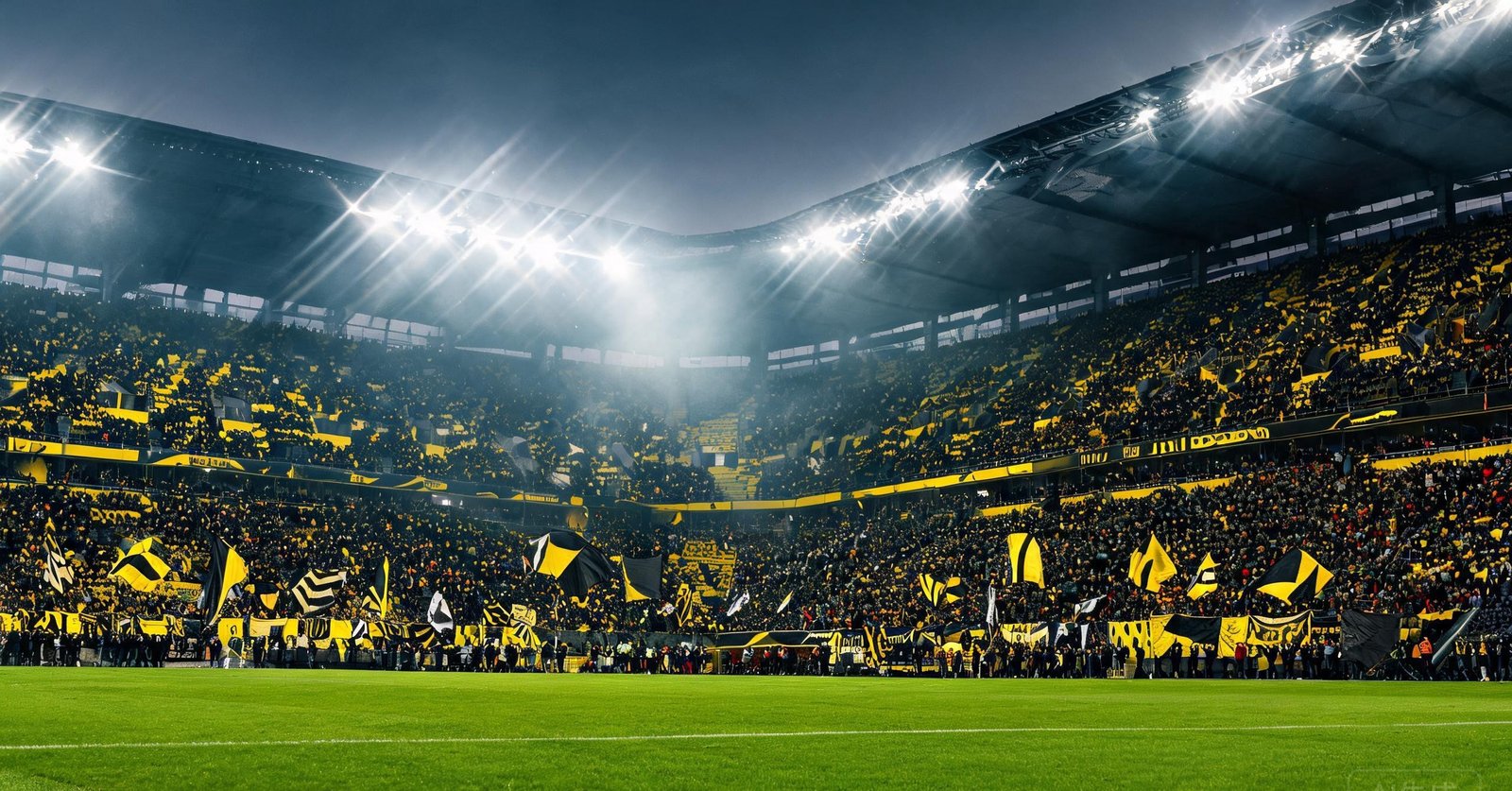
The Bundesliga Transition Football Analysis in Numbers
The Bundesliga transition football analysis compares the speed metrics of German clubs against the rest of Europe, showing how Bayern's pressing and Leverkusen's controlled counters set the template. This Bundesliga transition football analysis is not just descriptive – the transition rates feed directly into the model's expected-goals inputs for every German fixture.
Apply the Bundesliga Transition Football Analysis
FutebolAI integrates the Bundesliga transition football analysis into its match simulations and verifies every published projection against the real scoreline in the prediction tracker, keeping the tactical assumptions measurable across the season.
Related reading: Bundesliga predictions hub | Der Klassiker projection.
All analysis and predictions are for entertainment purposes only. Not betting advice.
Related Predictions
Unlock Today’s Free Predictions
Get 3 complete AI model outputs, exact score forecasts and tactical analysis — free predictions refreshed daily.
7-day money-back guarantee on your first plan · Cancel anytime
Get AI Predictions by Email — Free
Join our weekly newsletter: verified predictions, match previews and standings — straight to your inbox. No spam, unsubscribe anytime.
Want a free account? Join Basic Fan — free
Explore selected long-form research.
League and season work sits in the Analysis Library, separate from the live fixture record.
Get Free Football Predictions
Subscribe to receive weekly match previews and AI predictions for Europe's top leagues. No spam, unsubscribe anytime.
📊 Key Metrics
How to read the confidence indicator
High Confidence
Moderate Confidence
Low Confidence
This is a relative indicator attached to the published forecast, not a guarantee or a calibrated probability. Judge it together with the public prediction record.
Uncertainty and disclaimer
AI predictions are probabilistic in nature and do not guarantee outcomes. Football matches involve inherent uncertainty including injuries, suspensions, weather conditions, and other unpredictable factors. Past performance does not guarantee future results. This analysis is provided for information and entertainment only and is not betting or financial advice.
Disclaimer: FutebolAI provides AI-generated analytical content for informational purposes only. These predictions do not constitute financial or gambling advice. Users must be 18+ and located in jurisdictions where online sports prediction services are permitted. For full terms, visit our Age & Eligibility Policy and Disclaimer. © 2026 FutebolAI. All rights reserved.
Frequently Asked Questions
What is the FutebolAI prediction for Bundesliga 2025/26: The Rise of Transition Football in Germany?
Bundesliga 2025/26: The R...
How does FutebolAI generate its predictions?
FutebolAI combines xG analysis, tactical profiling, team form and historical datasets across Europe's top leagues using a proprietary AI model. All predictions are generated from verified match data and are provided for entertainment purposes only.
How accurate are FutebolAI predictions?
As of 2026-10-28, FutebolAI has 49% of 196 settled predictions verified correct, using public API reconciliation. The live Prediction Accuracy Tracker is at https://futebolai.com/prediction-tracker/
Where can I see FutebolAI past predictions and results?
Every prediction is publicly reconciled against real match results. View the live Prediction Accuracy Tracker at https://futebolai.com/prediction-tracker/ and the past predictions archive at https://futebolai.com/past-predictions/.