
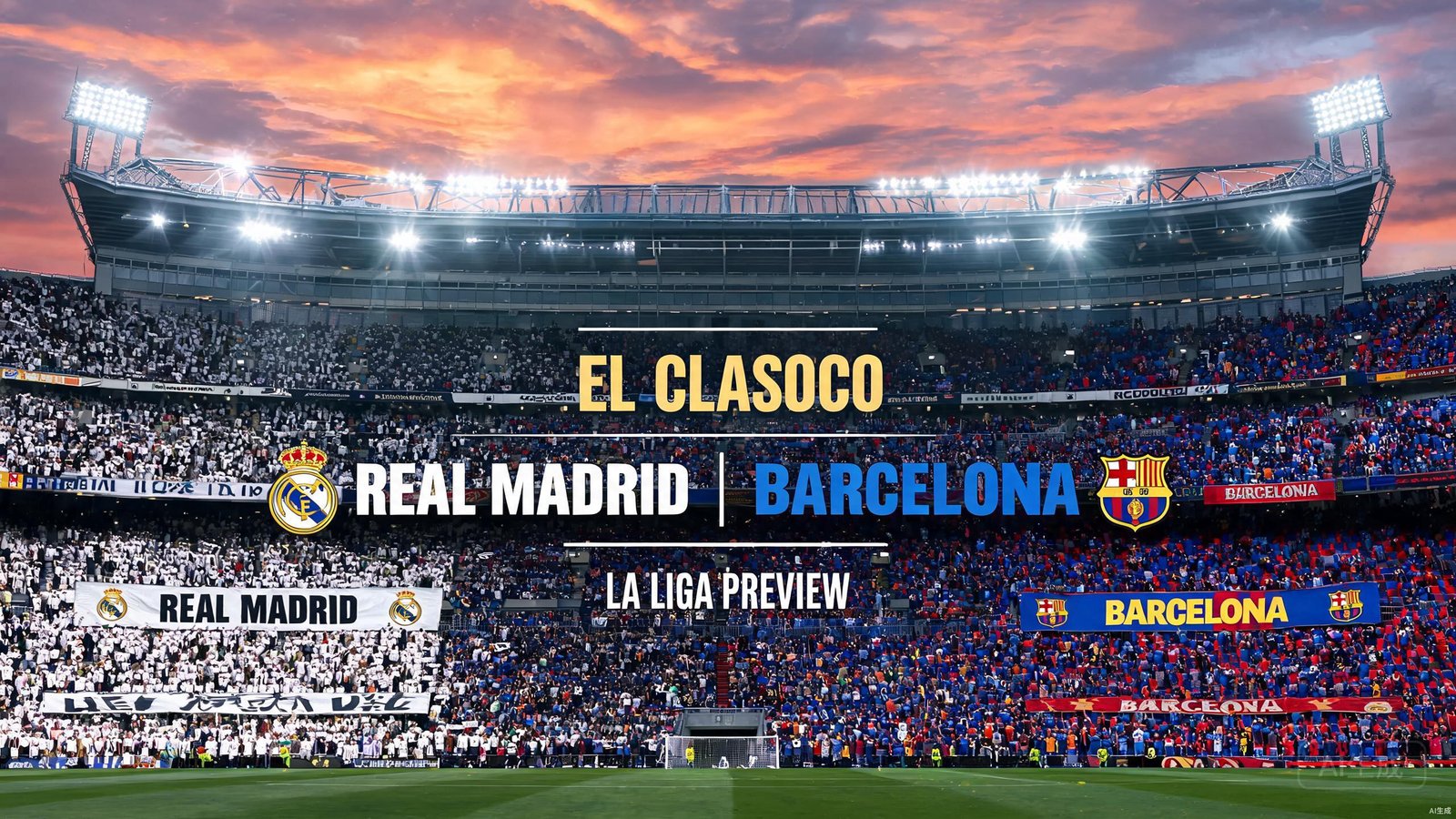
La Liga 2025/26: The Tactical Battle Between Barcelona and Real Madrid
The 2025/26 La Liga season was defined by one of the most compelling title races in recent memory, a tactical war between Hansi Flick’s Barcelona and Carlo Ancelotti’s Real Madrid that went down to the final weeks. Real Madrid ultimately reclaimed the crown with 89 points, edging Barcelona by a margin that was decided in a pivotal El Clasico late in the campaign. But the five-point gap between the two giants understates how closely matched these sides were tactically. This analysis examines the contrasting systems, the two El Clasico encounters, the midfield battlegrounds, and the statistical fingerprints that separated the champions from the runners-up.
Hansi Flick’s Barcelona: Relentless Verticality and Aggressive Lines
Data scope: this analysis uses the fixture, competition, standings and result fields available to the publishing workflow. It does not attribute unavailable specialist metrics or team-news data to football-data.org. See the methodology for the current source and review rules.
Carlo Ancelotti’s Real Madrid: Pragmatic Excellence and Transitional Lethality
Ancelotti’s Real Madrid represent the tactical antithesis of Flick’s Barcelona. The 4-3-3, occasionally shifting to a 4-4-2 diamond in possession, is built on reactive brilliance: conceding territory and possession willingly, then devastating opponents through the transitional speed of Kylian Mbappe, Vinicius Junior, and Jude Bellingham. Real Madrid scored 78 goals, fewer than Barcelona, but conceded only 35, the best defensive record among La Liga’s top four. Their average possession of 52.1% was remarkably modest for a title-winning side, reflecting Ancelotti’s willingness to let opponents have the ball.
El Clasico: Two Matches, Two Stories
The Midfield Battle
The midfield confrontation was the tactical fulcrum of every Clasico. Barcelona’s Pedri-Gavi-Frenkie de Jong trio prioritised positional dominance and progressive passing, averaging 612 completed passes per match between them. Real Madrid’s Tchouameni-Valverde-Bellingham axis prioritised physicality and transition coverage, averaging 14.3 ball recoveries per match and completing only 348 passes. The contrast in passing volume, nearly double for Barcelona, reflects the fundamental philosophical difference: Barcelona’s midfield exists to control the ball, Real Madrid’s exists to win it back and release it forward at maximum speed.
Formation and Phase Comparison
Statistical Head-to-Head
- Possession: Barcelona 61.3% vs Real Madrid 52.1%
- Goals scored: Barcelona 84 vs Real Madrid 78
- Goals conceded: Barcelona 38 vs Real Madrid 35
- available match indicatorsA per match: Barcelona 1.5 vs Real Madrid 1.1
- Points: Real Madrid 89 vs Barcelona 84
Real Madrid’s superior points total despite inferior attacking metrics is explained by their efficiency in close matches. Real Madrid won 12 matches by a single goal, compared to Barcelona’s 8, reflecting Ancelotti’s ability to grind out results through defensive solidity and individual brilliance. Barcelona’s more expansive approach produced higher peaks but also more costly slip-ups, and in a title race decided by five points, those slip-ups proved decisive.
—
Data Sources & AI Transparency
Data Sources: Match statistics and historical data in this article are sourced from the Football-Data.org API, which aggregates official data from league governing bodies. Standings, fixtures, and results are verified against official league records.
AI-Generated Content: Tactical analysis and match predictions in this article are generated using AI-assisted models based on the statistical data above. All AI-generated content is reviewed by our editorial team before publication. Learn more about our prediction methodology and editorial policy.
Author: Rafael Costa — Football Data Analyst at FutebolAI | This article was last reviewed and updated on the date shown above.
All analysis and predictions are for entertainment purposes only. Not betting advice.
Related Predictions
Choose Your Plan
Unlock AI-powered football predictions and in-depth tactical analysis
Basic Fan
- ✓ Public prediction tracker
- ✓ Free Preview
- ✓ Membership dashboard
Pro Monthly
- ✓ 5 big match previews
- ✓ Season & tactical analyses
- ✓ AI prediction model access
- ✓ Transfer window insights
Pro Analyst
- ✓ Everything in Pro Monthly
- ✓ Annual billing (save 25%)
- ✓ AI prediction model access
- ✓ Priority support
All predictions are for entertainment purposes only. Not betting advice.
Unlock Today’s Free Predictions
Get 3 complete AI model outputs, exact score forecasts and tactical analysis — free predictions refreshed daily.
7-day money-back guarantee on your first plan · Cancel anytime
Get AI Predictions by Email — Free
Join our weekly newsletter: verified predictions, match previews and standings — straight to your inbox. No spam, unsubscribe anytime.
Want a free account? Join Basic Fan — free
Get Free Football Predictions
Subscribe to receive weekly match previews and AI predictions for Europe's top leagues. No spam, unsubscribe anytime.
Frequently Asked Questions
What is the FutebolAI prediction for La Liga 2025/26: The Tactical Battle Between Barcelona and Real Madrid?
La Liga 2025/26: The Tact...
How does FutebolAI generate its predictions?
FutebolAI combines xG analysis, tactical profiling, team form and historical datasets across Europe's top leagues using a proprietary AI model. All predictions are generated from verified match data and are provided for entertainment purposes only.
How accurate are FutebolAI predictions?
As of 2026-10-27, FutebolAI has 49.7% of 191 settled predictions verified correct, using public API reconciliation. The live Prediction Accuracy Tracker is at https://futebolai.com/prediction-tracker/
Where can I see FutebolAI past predictions and results?
Every prediction is publicly reconciled against real match results. View the live Prediction Accuracy Tracker at https://futebolai.com/prediction-tracker/ and the past predictions archive at https://futebolai.com/past-predictions/.
